If you keep hearing the word and wonder what is sustainability, here is the short answer: meeting today’s needs without stopping future generations from meeting theirs. The rest is detail.
| Item | Value |
|---|---|
| Classic definition of sustainable development | Development that meets the needs of the present without compromising the ability of future generations to meet their own needs |
| Year the UN 2030 Agenda was adopted | 2015 |
| Number of Sustainable Development Goals | 17 |
| Agenda 21 adopted at the Rio Earth Summit | June 1992, by more than 178 countries |
| Earth Overshoot Day, 2025 estimate | July 24 |
The figures come from the UN Sustainable Development Goals page and the Global Footprint Network’s 2025 calculation page. Figures can change, so check the source before you rely on them.
What sustainability means in plain English
At its simplest, sustainability is about making things last. A practice is sustainable if it can continue for a very long time without using up the resources or damaging the systems it depends on.
Think of a bank account. If you spend only the interest, the balance stays put. If you spend the savings itself, the account runs dry, however comfortable things feel for a while.
Nature works the same way. A forest that is harvested no faster than it regrows can supply timber indefinitely. A forest cut faster than it regrows is a one-off windfall.
The word is used in many settings, so it helps to separate a few common meanings:
- Environmental: keeping air, water, soil, climate and wildlife healthy enough to keep supporting life.
- Social: making sure people have food, shelter, work, health care and a fair say in decisions.
- Economic: running businesses and economies that can last without relying on damaging the other two.
Those strands are often combined, and the three pillars of sustainability idea explains how they fit together. Everyday talk often shrinks the whole idea down to recycling or “being green”. That is part of it, not the whole.
Where the idea comes from
People have worried about running out of timber, fish and fertile soil for centuries. The modern, global form of the idea took shape in the late twentieth century, when environmental damage and poverty were increasingly seen as linked problems.
The best-known definition comes from the Brundtland Report, named after the commission’s chair. It says that, in its words, “Sustainable development is development that meets the needs of the present without compromising the ability of future generations to meet their own needs.”
The report adds that this contains two key ideas:
- The concept of needs, especially the essential needs of the world’s poor, which should get overriding priority.
- The idea of limits set by technology and social organisation on the environment’s ability to meet present and future needs.
Notice what that definition does not say. It does not call for an end to growth or development. The report states that sustainable development requires economic growth in places where essential needs are not being met.
The definition was later criticised as vague, because it sets no targets and no way to measure progress.
A second milestone followed in June 1992. At the Earth Summit in Rio de Janeiro, more than 178 countries adopted Agenda 21, a plan of action for a global partnership on sustainable development, according to the UN’s own history of the goals.
Why limits matter: the planet’s budget
Sustainability only makes sense if there are limits. Earth produces a finite amount of food, timber, fish and clean air each year, and it can absorb only so much waste.
One popular way to picture this is Earth Overshoot Day. Global Footprint Network calculates the number of days that Earth’s annual biocapacity can provide for humanity’s consumption. After that date, people are using more than nature can renew that year.
The group announced on June 5, 2025 that Earth Overshoot Day 2025 falls on July 24. That means that, by this measure, humanity used up a full year’s renewable supply in a little over half the calendar.
Treat the date as an illustration, not a precise verdict. It is a modelled estimate: the calculation builds on the 2025 edition of the National Footprint and Biocapacity Accounts, which have complete data up to 2022, and then extends the trends to the present year.
Even with that caveat, the message is clear. Living within planetary limits means taking less from nature than it can restore. It also means producing less waste than ecosystems can absorb.
The big areas sustainability covers
Because the idea is broad, it shows up in almost every part of life. These are the areas you will meet most often.
Energy
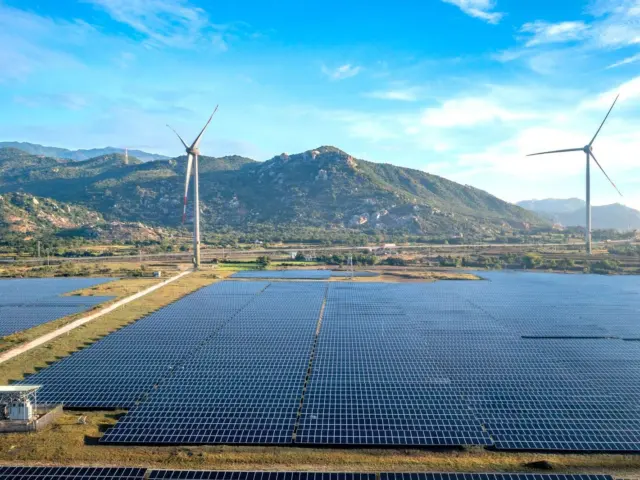
Most of the world’s climate-warming emissions come from producing and using energy. Shifting towards sources that do not run out and release little carbon is a central part of sustainability. Our guide to the types of renewable energy covers solar, wind, hydro, geothermal and others.
Food and farming
Farming uses land, water and fertiliser, and it shapes habitats and soils. Sustainable methods aim to keep land productive and ecosystems healthy while still feeding people. If you want the detail, read what is sustainable agriculture.
Materials and waste
A traditional economy takes materials, makes products and throws them away. A circular approach keeps materials in use through repair, reuse and recycling. The idea is set out in what is a circular economy.
Clothing
Fashion uses large amounts of water, energy and chemicals. Our explainer on what is sustainable fashion looks at fibres, working conditions and how long clothes last.
Business and finance
Companies and investors increasingly report on environmental, social and governance factors. The shorthand is explained in what is ESG.
How the world sets shared goals
Good intentions need a scorecard. The main one is the 2030 Agenda for Sustainable Development, which, as the UN puts it, was adopted by all UN Member States in 2015.
At its heart are the 17 Sustainable Development Goals, which the UN calls an urgent call for action by all countries, developed and developing, in a global partnership. They build on the eight Millennium Development Goals, which aimed to reduce extreme poverty by 2015.
The goals run from the first, ending poverty, to the seventeenth, strengthening the means of implementation and revitalising the global partnership. In between they cover hunger, health, education, clean water, energy, jobs, climate and life on land and below water.
One useful feature is that the goals are meant to be read together. Progress on one, such as clean energy, can help another, such as health. A full walk-through is in sustainable development goals explained.
Governments, businesses and communities choose how, and how fast, to act on them.
Sustainability and climate change
Climate change is the most visible sustainability problem, but it is not the only one. Biodiversity loss, polluted water, depleted soils and plastic waste are also on the list.
The links run both ways. A warming climate harms farming, water supplies and health. At the same time, how we grow food, build homes and generate power drives the warming.
That is why sustainability and climate are discussed together but are not identical. If you want the science of warming first, start with climate change basics.
How progress is judged
A fair question is how anyone knows whether something is getting more sustainable. The honest answer is that it depends on what you measure, and different measures can point in different directions.
Common yardsticks include:
- Footprints: estimates of the land, water or carbon a person, product or country uses.
- Life-cycle assessment: a method that tracks a product’s impact from raw materials through use to disposal.
- Targets and indicators: agreed goals with measurable markers, such as those attached to the UN goals.
- Company reporting: disclosures on emissions, workers, supply chains and governance.
Each has blind spots. A footprint can be modelled in different ways, a life-cycle study depends on the assumptions behind it, and company reports vary in quality. That is why it helps to look at several measures, and to ask who produced them and how.
Dates and baselines matter too. A claim that something improved is only meaningful if you know what it was compared with, and over what period.
Trade-offs and honest disagreements
Sustainability is not a single recipe, and sensible people disagree about parts of it. Real choices often involve trade-offs rather than clear wins.
A few familiar examples show how this works:
- A hydroelectric dam gives low-carbon power but can change rivers, fish and the lives of people downstream.
- Lightweight materials can cut fuel use in transport but may be harder to recycle.
- Cheap, fast products are affordable for people on low incomes but may wear out quickly.
- Protecting a landscape can limit local jobs unless other livelihoods are supported.
Seeing these tensions is not a reason to give up. It is a reason to ask what is being gained, what is being lost, and who carries the cost. The social side of sustainability exists precisely to keep that last question in view.
Critics also point to the vagueness of the word itself. When everything can be called sustainable, the term can lose its force, which is why concrete detail and evidence matter more than the label.
Who acts: governments, businesses and communities
It is tempting to treat sustainability as a personal lifestyle project. In practice, large shifts depend on several groups acting at once.
Governments set the rules: standards for buildings and vehicles, pollution limits, planning decisions and public transport. These choices shape what is easy or hard for everyone else.
Businesses decide how products are designed, made and delivered. Changes at that level, such as using less packaging or designing for repair, can reach millions of customers at once.
Communities and households make a difference through local projects, shared tools, community gardens, repair cafes and the everyday choices described below. They also vote, ask questions and influence employers and councils.
None of these groups can do it alone. Progress tends to be fastest where rules, markets and public support pull in the same direction.
Why it matters to you
It is easy to think of sustainability as a distant, global issue. Yet it touches ordinary things: the cost of energy bills, the price and quality of food, the safety of drinking water, how hot summers feel and how resilient local jobs are.
Taking the long view also tends to save money. Efficient homes cost less to run, durable goods need replacing less often, and reduced waste means fewer purchases.
Finally, sustainability is about fairness between generations. The people who will inherit the consequences of today’s choices cannot yet speak for themselves, and the definition at the heart of this guide asks us to keep their needs in mind.
What you can do in everyday life
Individual choices do not solve global problems alone, but they add up and they shape what shops, employers and local governments offer. The most useful steps are usually the least glamorous ones.
- Use less first. The cheapest, lowest-impact product is often the one you do not buy.
- Make things last. Repair, buy second-hand and choose durable items over disposable ones.
- Cut energy waste. Insulation, efficient appliances and sensible heating and cooling save money as well.
- Waste less food. Planning meals and storing food well avoids the resources used to grow and move it.
- Choose lower-carbon travel where you reasonably can, such as walking, cycling or public transport for short trips.
For a longer, practical list, see these green living tips. Start with one or two habits you can keep, rather than a long list you will drop in a month.
Spotting empty claims
Because “sustainable” sells, some firms use it loosely. Vague words like “eco-friendly” or “planet-positive”, with no detail behind them, should make you pause. The practice has a name, and what is greenwashing shows how to recognise it.
A few quick checks help:
- Is the claim specific, such as a stated percentage of recycled content, or only a general feel-good word?
- Does it cover the whole product or just one small part?
- Is there independent evidence, such as a recognised certification or published data?
- Is the product still harmful in a way the label ignores?
No single label is perfect. Asking these questions will filter out many of the weakest claims.

Common misunderstandings
A few myths come up again and again. Clearing them up makes the topic less intimidating.
- “It is only about the environment.” The original definition puts the essential needs of the world’s poor first, so people are central to it.
- “It means giving up growth.” The Brundtland Report says growth is needed where basic needs are unmet. What matters is the quality of that growth.
- “It is all about individual guilt.” Systems such as energy grids, transport and food supply matter enormously, and individuals have limited control over them.
- “Recycling is enough.” Recycling helps, but using less and reusing more usually has a bigger effect.
Key terms in short
Sustainability comes with its own vocabulary. These short definitions will help you follow news stories and company reports.
- Biodiversity: the variety of living things, from genes to species to whole ecosystems.
- Carbon footprint: the greenhouse gases linked to a person, product or organisation.
- Renewable resource: one that replenishes naturally on a human timescale, such as sunlight, wind or well-managed forests.
- Ecosystem services: the benefits nature provides for free, such as pollination, flood control and clean water.
- Net zero: a balance between greenhouse gases released and those removed from the atmosphere.
- Resilience: the ability of a community, business or ecosystem to cope with shocks and recover.
You do not need to memorise these. Return to the list when a term trips you up, and follow the guides linked above when you want more depth on one topic.
A final point on tone: sustainability is a direction of travel, not a pass-or-fail test. Almost everyone and almost every organisation can do better in some area, and steady improvement beats a perfect plan that never starts.
Frequently asked questions
What is sustainability in one sentence?
Show answer
It is meeting the needs of people today in a way that does not reduce the ability of future generations to meet theirs, while keeping nature healthy.
Is sustainability the same as being green?
Show answer
Not quite. Being green usually refers to environmental habits, while sustainability also covers social fairness and economic stability.
How many Sustainable Development Goals are there?
Show answer
There are 17, set out in the 2030 Agenda, which the UN says all its Member States adopted in 2015.
Does sustainability mean we must stop economic growth?
Show answer
No. The Brundtland Report argues that growth is needed where essential needs are unmet, and it asks for a change in the quality of growth.
Where should a beginner start?
Show answer
Start with the definition and the pillars, then pick one area that affects your daily life, such as energy at home or the food you waste, and build from there.